



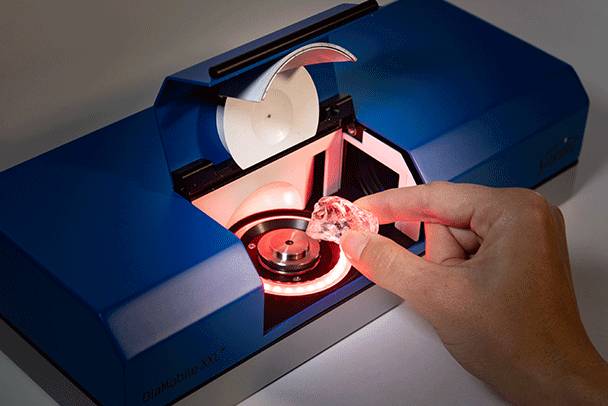

Sarine Technologies reported a 6% decline in group revenue to US$14.4 million for the six months ended 30 June 2026, as lower revenue from capital equipment and Galaxy scanning services offset growth in its newer recurring businesses.
The diamond technology company said continued competition from lab-grown diamonds (LGDs), alongside lower rough natural diamond supply, remained challenging for the natural diamond manufacturing sector. However, larger and higher-quality natural diamonds, which account for a substantial share of Sarine’s recurring revenue, have been less affected by LGD competition.
New Services Grow
Sarine’s Most Valuable Plan (MVP), its cloud-based solution for planning and optimising rough diamond utilisation, more than doubled revenue during the first half, albeit from a smaller base. The company said adoption increased following the addition of support for more rough diamond sizes and qualities, as well as further automation and optimisation capabilities.
Revenue from GCAL grading services increased by more than 50% during the period. Sarine said the grading business is benefiting from demand among manufacturers and retailers seeking to differentiate higher-end LGD products from more commoditised offerings.
The growth of these two recurring services partly offset lower revenue from Sarine’s traditional businesses. Capital equipment sales and Galaxy scanning services were affected by weaker conditions in the natural diamond manufacturing market.
Sarine said it expects adoption of MVP and GCAL grading services to continue during the second half of 2026 and into 2027. It also plans to open a GCAL jewellery evaluation and documentation centre in Mumbai during the second half of 2026, adding to its existing diamond grading laboratory in Surat.
Higher Costs Push Company into Loss
While group gross profit remained stable year on year, operating expenses increased by about 25%, or approximately US$2.2 million.
Sarine attributed nearly half of the increase to the weaker US dollar against the Israeli shekel. Other factors included the end of capitalising development costs for its LGD grading technology following its deployment, and the absence of a one-off positive impact from a lease termination recorded in the first half of 2025.
The company also recognised a US$0.5 million loss from its 33%-owned associate, Kitov.ai.
As a result, Sarine recorded a loss from operations of US$2.2 million and a net loss of US$3.5 million for the first half. The net loss also included tax-related expenses relating to previous years.
Focus on Recurring Revenue
Sarine is placing greater emphasis on recurring technology and grading services as conditions remain difficult for parts of the natural diamond manufacturing market.
The company said it will continue to focus on recurring services, including inclusion mapping software, MVP, LGD rough planning solutions, GCAL diamond and jewellery grading reports and other pay-per-use services.
Sarine said retail demand for natural diamonds appears to have remained stable based on industry reports, although it expects broader market conditions to remain challenging.
The company also said the LGD market is likely to remain highly price competitive. Its GCAL grading services are being positioned towards higher-end LGD products, where grading can be used to distinguish products from lower-priced mainstream LGDs.
Separately, Kitov.ai, in which Sarine holds a 33% stake, more than doubled revenue to US$1.5 million in the first half. Growth was driven primarily by repeat orders from aerospace and defence customers. The business has also received an initial order in the aircraft engine maintenance, repair and overhaul market, with a new inspection solution planned for launch in early 2027.
MVP and GCAL generated higher recurring revenue in the first half, partly offsetting lower revenue from Sarine’s established natural diamond-related activities. Sarine expects revenue from MVP and GCAL grading to continue growing during the second half of 2026 and into 2027.
